
Evaporative cooling physics: the real numbers behind the breeze
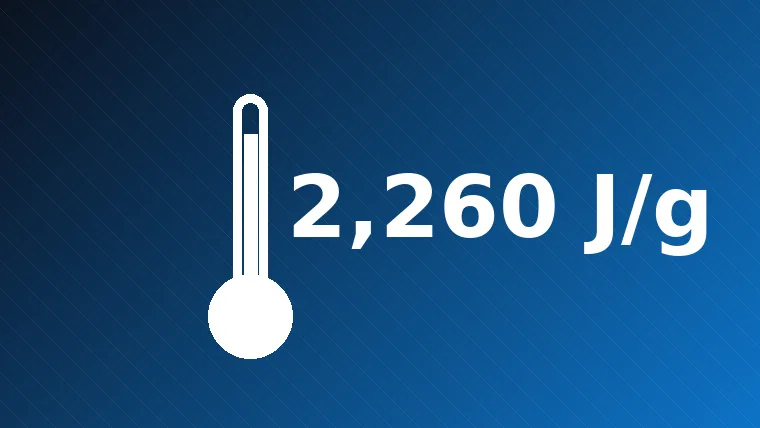
Evaporative cooling physics fits on an index card, and once you have it, every marketing claim in this category becomes checkable in your head. Two constants, one limit, one table.
Constant 1: 2,260 joules per gram
Evaporating water absorbs about 2,260 J/g (the latent heat of vaporisation). A cooler that evaporates 10 grams of water per minute is absorbing roughly 376 watts of heat — several times its fan’s electrical draw. This is why evaporative cooling is spectacularly efficient per watt, and it is the honest kernel inside the category’s wildest ads.
Constant 2: 334 joules per gram (the ice bonus)
Melting ice absorbs ~334 J/g and pre-chills the reservoir, so units with ice compartments (CoolJet, Froza, AerioQ) start with a colder outlet stream. The effect is real and finite: when the ice is gone, you are back to plain evaporation.
The limit: wet-bulb temperature
Evaporation can only cool air down to its wet-bulb temperature — which rises with humidity. The gap between dry-bulb (thermometer) and wet-bulb temperature is the entire budget an evaporative cooler can spend:
| Relative humidity | Theoretical max drop | Realistic single-pass drop | Verdict |
|---|---|---|---|
| 20% | ~13°C | 7–10°C | Excellent — a drop approaching 10 °C is reachable |
| 40% | ~9°C | 5–7°C | Good |
| 60% | ~6°C | 2–4°C | Marginal — breeze effect dominates |
| 80% | ~3°C | ≤1–2°C | Ineffective — use refrigeration (guide) |
Single-pass drops assume a compact pad and realistic airflow; premium ducted evaporative systems do better, tiny desk units often worse. Figures are calculated bounds, not lab measurements.
Using this while shopping
- Check your summer humidity first; the table above is your ceiling.
- Treat °C/°F-drop claims as dry-air, close-range numbers — the framing we apply in every review.
- Coverage claims in sq ft belong to a different technology; see the 45-watt audit.
- Whole-room, any-humidity cooling = compressor; size it with the BTU calculator.
Frequently asked questions
What is the wet-bulb temperature in one sentence?
The lowest temperature air can reach through evaporation alone — the hard floor under every evaporative cooler’s performance.
Does adding ice change the physics?
It stacks a second mechanism: melting ice absorbs about 334 J/g and chills the water, so the outlet stream starts colder. The evaporative ceiling still depends on humidity; ice buys a colder start, not a different climate.
How can a cooler absorb more heat than its wattage?
Its watts only drive the fan; the cooling energy comes from water changing phase. That is why 45 W of electricity can move a few hundred watts of heat — and why no amount of marketing turns that into kilowatts.
Recommended
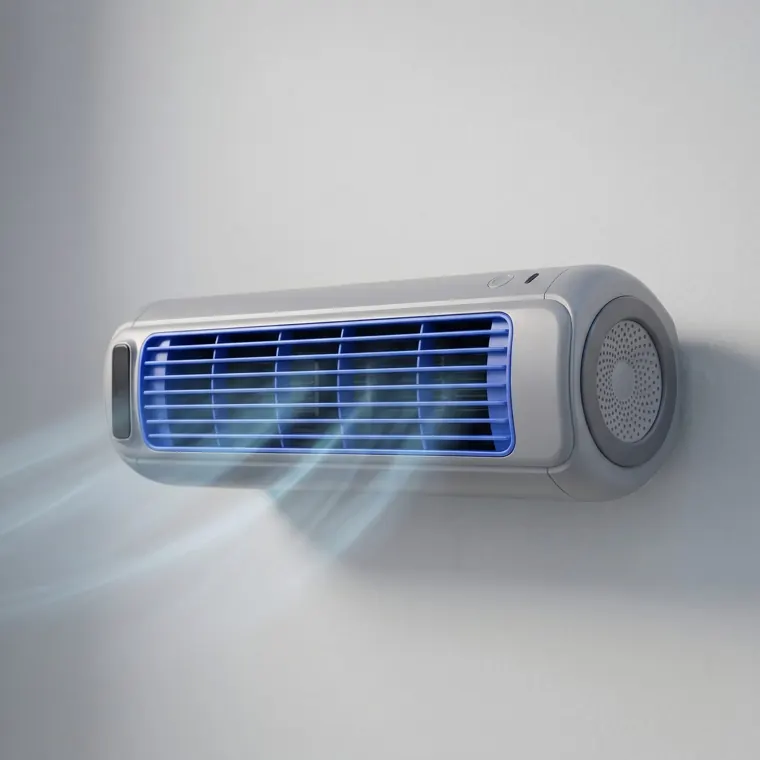
Froza review (2026): five watts, and what they can do
Froza review: the brand publishes 5 V / 1.0 A — about five watts. What that can actually cool, and why the checkout's 18 °C claim cannot be reached.
Read More →
Reader comments
Comments are moderated before appearing publicly. Your email is never displayed.