
Air purifier reviews
Purifiers do not cool anything, so we do not score them with our cooling rubric. This section uses a rubric built for the category — and the biggest difference is the filter: on a purifier the consumable, not the purchase price, is the real cost of ownership.
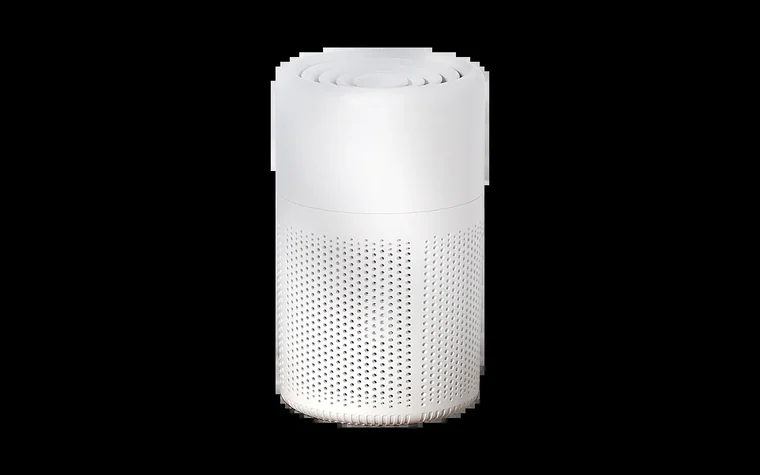
Why purifiers get their own rubric
A cooler and a purifier look alike on a desk and do nothing alike. A cooler moves air over water and makes the stream that reaches you feel cooler; a purifier pulls air through a filter and takes particles out of it. Neither lowers the temperature of a room, but only one of them is supposed to.
Scoring a purifier on cooling performance would be meaningless, so we do not. The rubric below replaces the cooling and value weights with filtration and filter cost, because on this category the consumable is the real price. A purifier bought for £60 with a £25 filter every three months costs more over two years than one bought for £120 with an annual filter — and the offer page rarely does that arithmetic for you.
The four numbers worth hunting for
CADR is the one that matters most, and it is the one most often missing. It states how much clean air the unit delivers per hour, so it is the only figure that connects a purifier to a room size honestly. Without it, “covers 30 m²” is a sentence, not a measurement.
Filter grade tells you what it can actually catch. True HEPA H13 is a defined standard; “HEPA-type” and “HEPA-style” are not. Filter price and life give you the cost of ownership. And a decibel figure decides whether it will still be running at 2 a.m. or living in a cupboard.
Across the coolers we cover, three sellers out of nine publish a wattage and two publish decibels. In this section the pattern is the same: what a maker declines to publish is written down as undisclosed and scored as such.
The rubric for this section
| Filtration | 30% |
|---|---|
| Filter cost | 20% |
| Noise | 20% |
| Energy | 15% |
| Documentation and trust | 15% |
Where a maker does not publish a figure — CADR, decibels, filter price, certification — we write that down rather than estimate it, and the missing data affects the score. That is the point of the rubric, not a side effect of it.