
Coolzy vs Coolizi (2026): compressor vs evaporative, settled

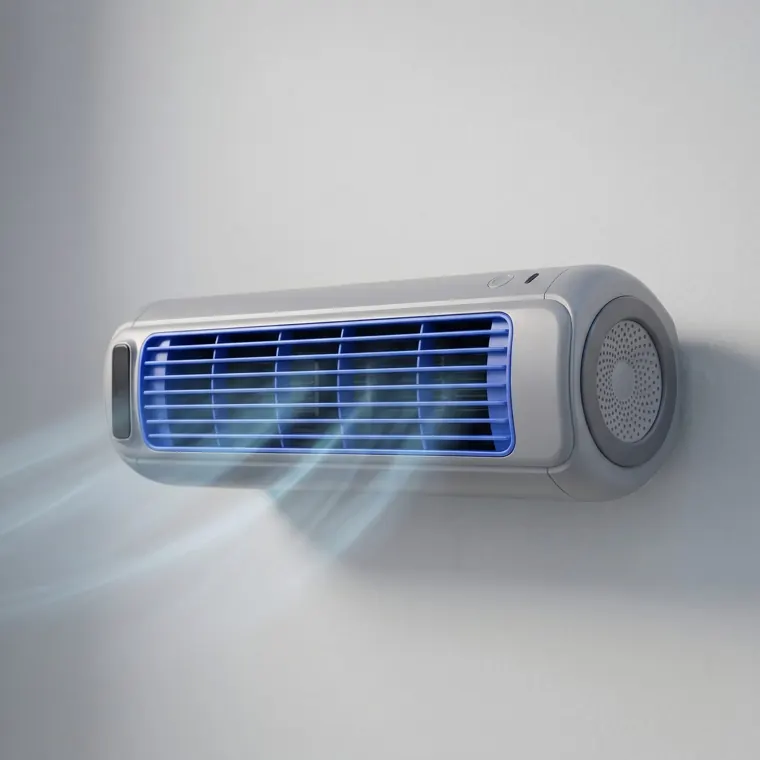
Two different products share a similar name. The Coolzy-Pro on this page is made by Coolzy (coolzy.com), an independent brand we are not affiliated with — a 340 W refrigerant compressor unit weighing around 15 kg. It is not the Coolizi Coolzy, the wall-mounted cooler-heater marketed by Coolizi Technology International. If you arrived here looking for the wall unit, that is the page you want.
Quick verdict
Coolzy vs Coolizi in one minute: these are opposite machines wearing the same “personal cooler” label. Coolzy-Pro is a genuine 340 W compressor air conditioner scaled down to cool one person — it works in any humidity and costs mid-hundreds. Coolizi is a 45 W evaporative device — it costs a fraction, sips power, and fades in humid air. Humid climate or daily reliance → Coolzy. Dry climate, desk duty or tight budget → Coolizi.
| Coolzy-Pro | Coolizi | |
|---|---|---|
| Technology | True refrigerant compressor (rotary) | Evaporative: water + ice reservoir |
| Cooling output | 1,100 BTU refrigerated stream, air ~10–12°C cooler | Evaporative stream; drop depends on humidity |
| Power draw | 340 W (stated) | 45 W (claimed) |
| Works in humidity | Yes | Weakly above ~60% RH |
| Noise | 45–50 dB (stated) | Not disclosed (low-watt fan class) |
| Weight | ≈15 kg / 37.4 lb | Light tabletop class |
| Venting | None required (warm air rises; optional exhaust add-on) | None |
| Consumables / upkeep | None; filter rinse | Water/ice refills; pad care |
| Recognition | 2024 Good Design Award winner | — |
| Typical price band | Mid-hundreds USD (check current) | Budget D2C offer |
| FreezAir coverage | External benchmark (not affiliated) | Full Coolizi review — 7.8/10 |
Round 1 — cooling power
Mini-verdict: Coolzy wins outright. A compressor moves heat; evaporation only trades heat for humidity. Coolzy-Pro’s 1,100 BTU refrigerated stream arrives 10–12°C cooler than the room in any weather. Coolizi’s stream can approach a similar drop only in dry air with an iced tank — our 45 W analysis shows why its room-size marketing should be ignored either way.
Round 2 — energy & running cost
Mini-verdict: Coolizi wins. 45 W vs 340 W is a 7.5× gap; over a 10-hour summer day that is roughly 0.45 kWh vs 3.4 kWh. Both are frugal next to a 1,000–1,400 W conventional portable. Put your own tariff into the energy cost calculator — it has a preset for exactly this match-up.
Round 3 — noise
Mini-verdict: draw, with a transparency bonus to Coolzy. 45–50 dB is quiet-conversation territory and honest for a compressor; Coolizi’s unpublished figure is probably lower at minimum speed, but “probably” is doing work there. Translate the numbers at the noise comparison tool.
Round 4 — price & guarantee
Mini-verdict: Coolizi wins on outlay, Coolzy on lifespan logic. One is an impulse-priced offer with a money-back window; the other is an appliance purchase with an established brand behind it. If the budget only stretches to one Coolzy, it also stretches to a Coolizi for every room of the house — which framing matters depends entirely on your climate (see Round 1).
Final winner — by buyer, not by brand
- Humid-climate daily user: Coolzy-Pro. Nothing evaporative will satisfy you.
- Dry-climate desk worker: Coolizi. 90% of the felt benefit at a small fraction of the price.
- Renter cooling a bedside: Coolizi first; upgrade path to Coolzy if summers bite harder.
- Van / off-grid: Coolizi — 45 W is battery-friendly; 340 W wants shore power or serious solar.
- “Buy once, cry once” buyer: Coolzy-Pro, eyes open about the price.
From our review shelf


Frequently asked questions
Are Coolzy and Coolizi the same kind of device?
No — that is the whole point of this Coolzy vs Coolizi comparison. Coolzy-Pro contains a genuine refrigerant compressor (1,100 BTU, 340 W stated); Coolizi cools by evaporating water and ice at a claimed 45 W. Same “personal cooling” goal, opposite machinery.
Which works in humid weather?
Coolzy, decisively. Compressor refrigeration removes heat regardless of humidity (and dehumidifies a little). Evaporative devices like Coolizi weaken as humidity rises — above roughly 60% RH the effect fades toward a plain fan.
Which is cheaper to run?
Coolizi, by roughly 7–8× on stated wattage (45 W vs 340 W). At a typical US tariff, ten hours of Coolizi costs pennies; ten hours of Coolzy-Pro is still under a dollar. Both embarrass a 1,000+ W conventional portable.
Which is quieter?
Likely comparable at low speeds. Coolzy publishes 45–50 dB; Coolizi publishes nothing, but low-watt evaporative fans typically sit in the 30s–40s. We credit Coolzy for publishing a number at all.
Is the price gap really that big?
Yes. Coolizi is a budget direct-to-consumer offer; Coolzy-Pro typically sells in the mid-hundreds of dollars (check the current price — it moves). You are paying for a real compressor, an award-winning design and humidity-proof performance.
So which one should I buy?
Dry climate, tight budget, desk or bedside use: Coolizi. Humid climate, daily serious use, budget available: Coolzy-Pro. Our full verdict below maps five buyer profiles to a winner each.
Recommended

Evapolar vs Coolzy (2026): USB cube vs real compressor
Evapolar vs Coolzy compared honestly: USB evaporative cube versus a real 340 W compressor. Specs, running costs, humidity behaviour and a clear winner.
Read More →Coolizi review (2026): what a 45 W cooler can really do
Coolizi review with a physics check of the 1,300 sq ft claim: weighted score, pros and cons, real specs, hourly running cost and honest alternatives.
Read More →Froza review (2026): the renter’s no-drill cooler, checked
Froza review for renters: we check the 8°C-cooler-air claim, score the no-drill wall mount, list real pros and cons and compare honest alternatives.
Read More →
Reader comments
Comments are moderated before appearing publicly. Your email is never displayed.