
Wearable stress-relief devices: the other half of a good night’s sleep
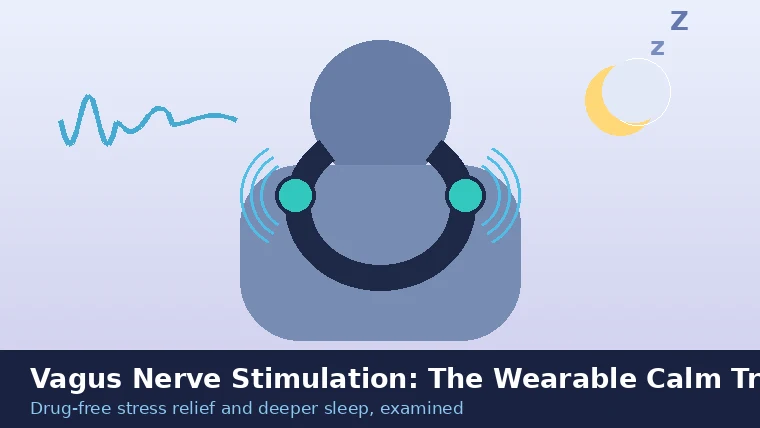
Our heatwave sleep guide attacks the thermal half of bad sleep: body, bed and room temperature. But readers keep asking about the other half — the racing mind that stays switched on long after the room has cooled down. A fast-growing category of wearable stress-relief devices claims to address exactly that, and the most talked-about approach right now is non-invasive vagus nerve stimulation. Here is a level-headed look at what these devices do, what the claims rest on, and where they genuinely fit next to the cooling hardware we test.
Sleep has two enemies: heat and an overactive mind
Sleep physiology needs two things to happen together: a core temperature drop of roughly 1 °C, and a nervous-system shift from sympathetic (“fight-or-flight”) to parasympathetic (“rest-and-digest”) dominance. Cooling hardware handles the first; no fan or AC on earth handles the second. That is why a person in a perfectly cooled bedroom can still lie awake with a spinning mind — and why the wellness industry has moved into the gap with wearables that target the nervous system directly.
What vagus nerve stimulation wearables actually do
The vagus nerve is the main highway of the parasympathetic nervous system, running from the brainstem through the neck to the major organs. Stimulating it — historically done with implanted medical devices for epilepsy and depression — nudges the body toward the relaxed state. The new consumer generation does this non-invasively: gel electrode pads against the skin of the neck deliver gentle electrical pulses during short sessions of a few minutes.
A prominent example is Pulsetto, a neck-worn stimulator that runs 4-minute sessions controlled from a phone app with five programs (stress, anxiety, sleep, burnout and pain management). The brand reports over 100,000 users and cites internal surveys in which 86% of daily users reported feeling calmer after four weeks — self-reported wellness data, as is typical for the category, not clinical-trial evidence. The honest framing: peer-reviewed research on transcutaneous vagus nerve stimulation is genuinely promising for stress and sleep outcomes, but consumer devices are wellness products, not medical treatments, and individual results vary.
The market right now: what’s new
The category is moving quickly. Compared with the first wave of clip-on ear stimulators, the current generation of neck-worn devices adds bilateral stimulation (both sides of the neck at once), unlimited app-controlled sessions with no per-use limits, and pricing that has fallen from the $700+ of early devices to around the $300 mark. As a market development it mirrors what we saw in personal cooling: a technology that started clinical, got simplified for home use, and now competes on comfort, app quality and price. Partner sites like Pulsetto Offer track the current bundles and pricing for readers who want to dig into the specifics of that device.
Pairing a calm nervous system with a cool room
Nothing about these wearables replaces thermal basics — a 30 °C bedroom will wreck sleep no matter how relaxed your vagus nerve is. The evidence-backed stack, in order of impact:
| Layer | Tool | What it fixes |
|---|---|---|
| 1. Room temperature | Right-sized cooling (size it here) | The core-temperature drop sleep physically requires |
| 2. Personal zone | A quiet bedside cooler (our bedroom picks) | Airflow across skin without whole-room cost |
| 3. Nervous system | Wind-down routine; optionally a VNS wearable session | The mental switch from alert to rest |
| 4. Consistency | Fixed sleep schedule, dark room | Circadian timing that makes the rest work |
Used that way — as layer three, not a substitute for layers one and two — a short pre-bed stimulation session is a low-risk experiment: the consumer devices in this category typically carry 30-day money-back guarantees, so the cost of testing one against your own sleep is close to zero.
FAQ
Do vagus nerve stimulation wearables actually work?
Peer-reviewed research on transcutaneous vagus nerve stimulation shows promising effects on stress markers and sleep quality, but consumer wearables are wellness devices whose headline numbers come from self-reported user surveys. Treat them as a plausible aid worth a money-back-guarantee trial, not a proven treatment.
Is neck-worn vagus nerve stimulation safe?
The consumer devices use gentle, low-intensity stimulation designed for home use. People who are pregnant, have a pacemaker or other implanted device, or have a diagnosed medical condition should consult a doctor before use — the manufacturers themselves state this.
Should I buy a cooling device or a stress wearable first?
Cooling first, always. The core-temperature drop is a physical requirement of sleep; nervous-system calm is the layer on top. If your bedroom is above roughly 24 °C at night, fix that before spending on any wearable.
FreezAir reviews cooling hardware; wellness wearables mentioned here are covered as market context and partner references, not products we have lab-tested. This article is not medical advice.
Recommended

Do personal air coolers actually work? The honest answer
Do personal air coolers actually work? Yes, within physics: expect a cooler directed airstream in dry air, not a colder room. Here is what to expect where.
Read More →
ASHRAE vs DOE SACC: why your portable AC lists two BTU numbers
ASHRAE vs DOE SACC BTU ratings decoded: why portable ACs show two numbers, which one predicts real cooling, and how to convert between them when sizing.
Read More →
Reader comments
Comments are moderated before appearing publicly. Your email is never displayed.